
SF Chronicle — “Exclusive: S.F. proposal would create fund to pay workers stiffed by employers”
By Aldo Toledo, San Francisco Chronicle — Read the original article here.
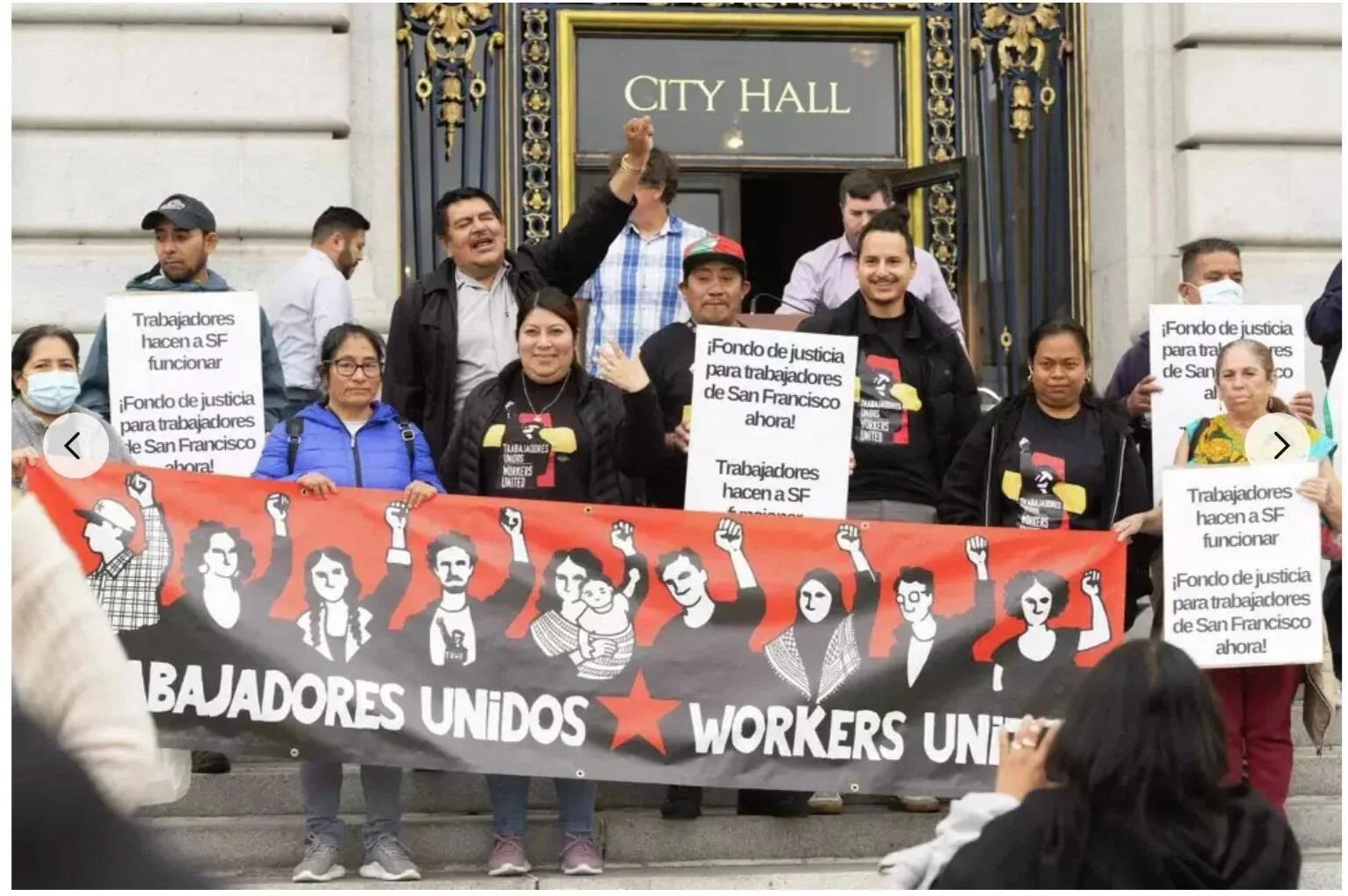
A group gathers for a photo before a rally on Tuesday outside San Francisco City Hall in support of a worker relief fund.
Benjamin Fanjoy/Special to the Chronicle
For two years, Qiming Huang, 68, has obsessed over $9,680.72: The money his last employer — a now-closed Chinese restaurant on Clement Street — never paid him.
Huang started as a dishwasher there in 2021. About a year later, he began noticing his checks were less than he expected. Huang kept track of the amounts on a piece of paper, and asked his boss to recognize that he owed him the money. When he left for another job, he showed the full accounting to his boss, who he said acknowledged the debt.
Huang continued to press his old boss for the money. But when the restaurant closed, he nearly lost hope of ever getting what was owed to him.
Desperate, Huang called the San Francisco Office of Labor Standards Enforcement, which began an investigation. They found Huang’s boss owed him the money and ordered him to pay it. However, nothing has happened — and Huang is still out almost $10,000.
“I was supposed to save that wage to retire,” Huang told the Chronicle. “Instead I have to continue working longer to raise my family.”
Huang’s worker restitution case is just one of the more than 400 cases that the OLSE took up in fiscal 2022-2023, according to its most recent annual report. While the office collected more than $21 million in worker restitution and penalties for 14,000 workers that year, many like Huang weren’t able to get the wages they were due.
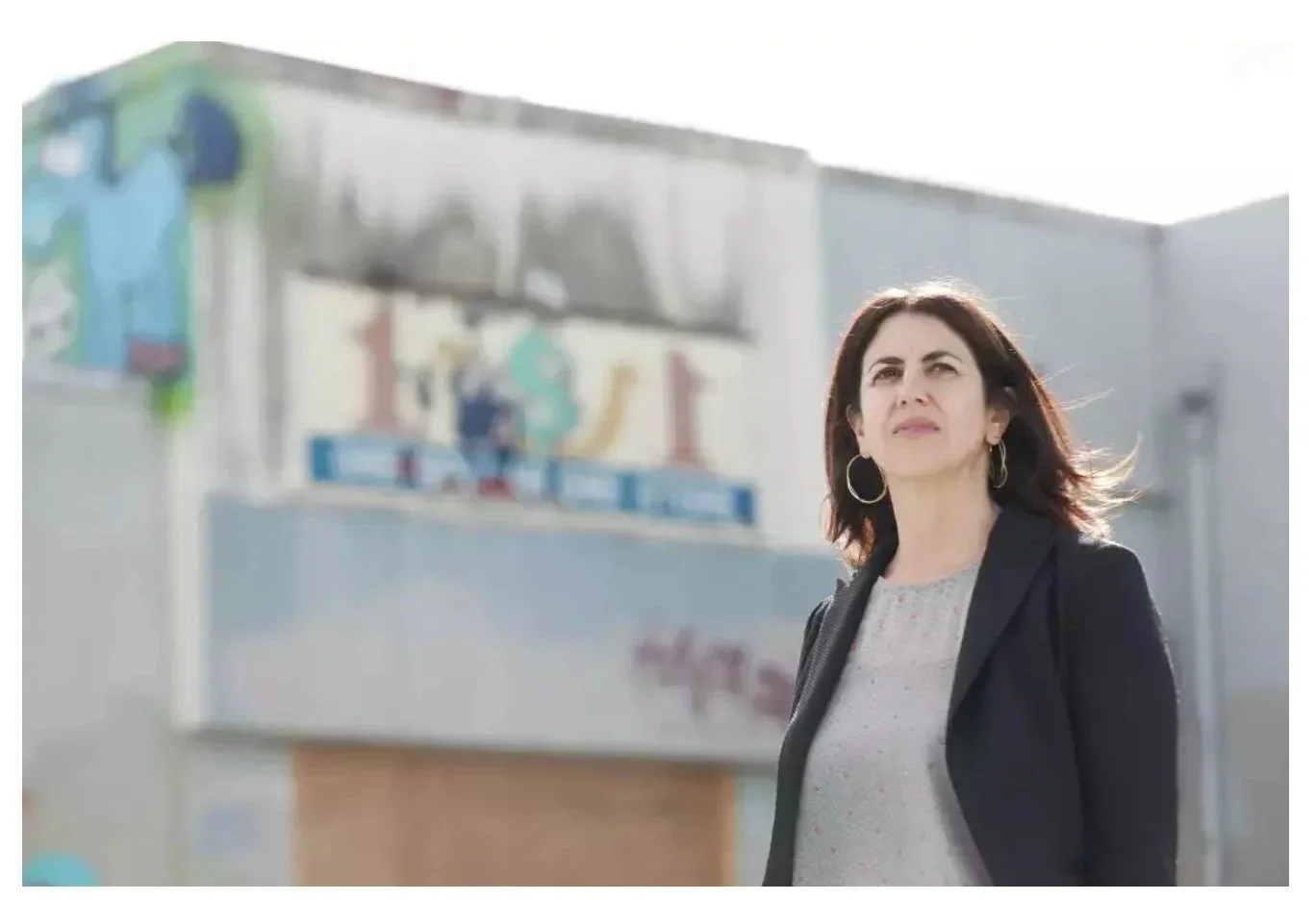
Supervisor Hilary Ronen introduced legislation to create a fund to pay San Francisco workers who’ve been stiffed by their employers.
Lea Suzuki/The Chronicle
To address the predicament of workers like Huang, Supervisor Hillary Ronen on Tuesday introduced legislation to create a fund to pay San Francisco workers who’ve been stiffed by their employers. Ronen came up with the plan with the Asian Law Caucus and Chinese Progressive Association.
The fund, which could be about $500,000 or more a year, would serve San Francisco workers who were owed wages as determined by the OLSE or if the OLSE has entered into a settlement agreement with an employer but is unable to collect some or all of the restitution. Ronen wants to pay for the fund with the future penalties OLSE collects, and an existing city fund with unclaimed money for workers.
The fund will aim to provide workers 100%, or as much as possible, of what is owed to them based on what’s available in the fund, the plan says, with priority given to workers who make minimum wage.
“So often our government has used taxpayer dollars to bail out big banks and really wealthy entities, and this is an opportunity for San Francisco to use penalties collected when employers break the law to fund a fund to actually pay workers … what they were owed,” Ronen said.
Wage theft remains a major issue in California and the Bay Area, especially for those who worked in businesses that have closed and paid low wages. A recent Rutgers University report found that 14% of workers in the Bay Area were paid under the minimum wage between 2014 and 2023. The OLSE has seen a 34% increase in cases opened since the pandemic.
In fiscal year 2022-2023, the OLSE collected more worker restitution than any in prior year and possibly more than any other municipal or state labor enforcement agency in the country, its annual report says.
But sometimes the OLSE is unable to collect the money owed because the business has closed, the employer has filed for bankruptcy or fled, or there are no assets to pay what they owe.
Workers who would have met the eligibility requirements on or after Jan. 1, 2023, will be eligible for payment.
Iris Barrera Hurtado, a community organizer with Trabajadores Unidos, said she’s working with a Salvadoran woman named Sonia who faced similar challenges at a San Francisco fast food outlet.
Hurtado said Sonia was not paid sick leave, didn’t receive legally entitled health insurance and wasn’t getting the work schedule with the appropriate two weeks notice required by the city. She also wasn’t paid for overtime and was not allowed meals or rest breaks at times.
Mei Mei Chan, a community advocate for workers’ rights at the Asian Law Caucus, told the Chronicle “workers are unable to actually collect the money they’re owed because their employer has gone under or disappeared, but their rent and medical bills are still due.” She said the fund will help protect workers.
It’s unclear if Ronen will get support for her proposal, as the city is facing tight budget years ahead. Supervisor Dean Preston said he’ll support the plan.
“I definitely have a lot of workers and constituents who have faced this situation,” Preston said. “There’s a need for this.”
The fund would be good news for Huang, he said, as he continues to try to keep his family afloat. In 2022 Huang’s wife had brain surgery and he had to stop working to help her.
“With paying medical fees for myself and my wife, and utility bills, pretty much I’m struggling every month,” Huang said. “That’s why I have insisted this boss should pay it back.”
