
Op-Ed: Our city needs more housing, AND they must be affordable – From Two SF Youth
By Victor Yu ’28 and Tina Deng ’26
When Victor’s family told him that they were going to move to the US, he was so excited. That was until he saw the living conditions they’d have to live in. His family walked into the cramped space in Chinatown, and immediately he hated it. Everything was unsanitary and shrunk down, it almost seemed inhumane. Yet it was all they could afford as new immigrants.
They walked into the small space of Victor’s grandparents’ room in the SRO and couldn’t move a step, only shuffling around awkwardly. The situation was so bad that eventually after too many arguments, his parents began to discuss having a divorce. But the issue isn’t only that Victor’s family had to endure that; the issue is that many families in San Francisco live in similar, barely suitable housing conditions.
As youth, we know from our own experiences how expensive San Francisco is, whether or not we keep up with politics. Whether our families are renting or paying off mortgages, the question of whether we can afford to live in the city long-term is a big concern when we think about our futures. Last year, when Youth MOJO surveyed 565 youth aged 13-24 across the city, housing was the number one issue that people named.
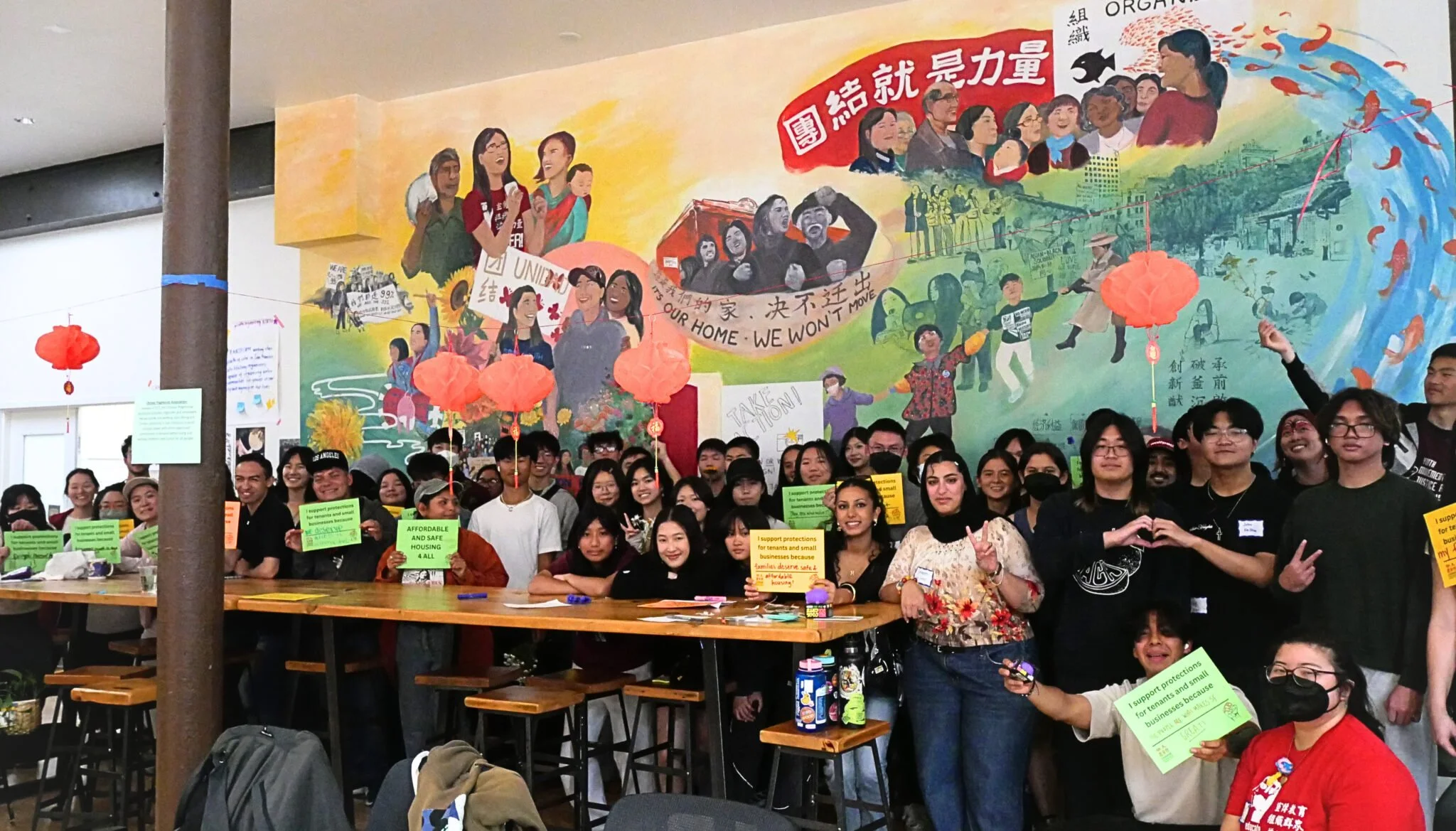
Image from our community teach-in about housing affordability and the harmful impacts ofupzoning on working class communities in SF.
Very soon, San Francisco is likely to pass the Mayor’s proposed zoning plan. Many areas around the city will see increases in building height limits, characteristic of a type of rezoning called upzoning.
On the surface, it sounds great: more units means lower prices, right? Unfortunately, in our experiences, the issue with housing is not really about building more, but about what kind of housing, and how much it costs. According to a report by People Power Media, market rate housing made up nearly 3 out of every 4 units built in SF from 2015-2022, resulting in housing that does not meet most people’s needs. So hundreds of units could be built, but if they are still sold at market rate, that’s not affordable to the everyday teachers, college students, and working-class people like our families.
In this way, upzoning can lead to the displacement of entire communities, as landlordstake away the space that community previously existed in. Some tenants may be priced out of their homes, or harassed, abused, and exploited so that they leave their homes, making space for demolition and redevelopment. This applies not only to people who rent for housing, but also small businesses that rent spaces to operate. Despite it being called the SF “Family” Upzoning Plan, it plans for the displacement and demolition of our homes and communities. Instead, this plan needs to center the input of youth and working families.
When Tina’s family first immigrated here, they lived in a cramped, tiny, second floor unit on Irving Street, squeezing 6 people into a space barely even meant for 4. Tina’s mother worked two jobs, living the double life of a barista and a laundromat cleaner, all while studying at CCSF. Their late grandfather washed dishes for well below the minimum wage, because he didn’t speak English.
There are far too many families living paycheck to paycheck like this, who have to struggle each day to simply keep a stable roof over their heads. It really doesn’t help that SF has not truly prioritized affordability for the communities who call this city home.
In the Sunset and the Richmond districts, there’s a vast and diverse array of small businesses that act as the hearts and souls of their communities. On Noriega Street alone, Tina’s neighborhood, there are dozens of small grocery stores, tiny hole-in-the-wall dim sum spots, restaurants, barbershops, and so many more, all bustling with youth and elders alike.
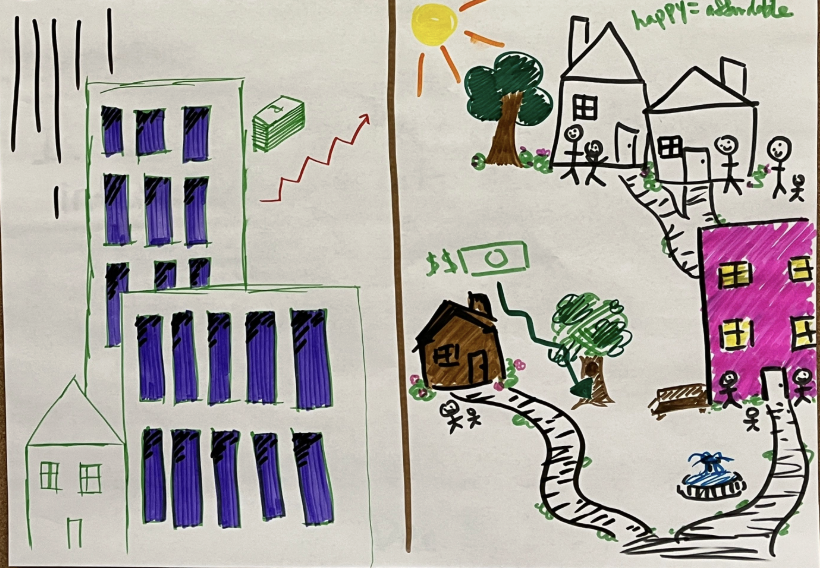
Image from a Youth MOJO workshop. Left image: how we think upzoning will impact our city. Right image: How we want our futures in this city to look like.
Under the city’s rezoning plan, many of these local community pillars might not survive; upzoning would bolster gentrification across the city, ramping up a process that has already endangered the existence of San Francisco’s most culturally significant and vibrant communities. Without stability or security within our own homes– the one place where we should be able to expect that– how do you expect these groups of people to give to our communities while trying to survive?
We want to be able to live in this city for years to come. We encourage other youth and community members to find out how the zoning plan may impact you, and to raise awareness because a lot of people don’t even know this is happening! Right now, Youth MOJO is currently collecting call-to-action cards about housing justice in the city – learn more here.
In order for our city to thrive, our government must do their job to invest in the stable and truly affordable housing that San Francisco’s everyday people need – and that begins with centering working-class youth and our families in its decisions on housing.
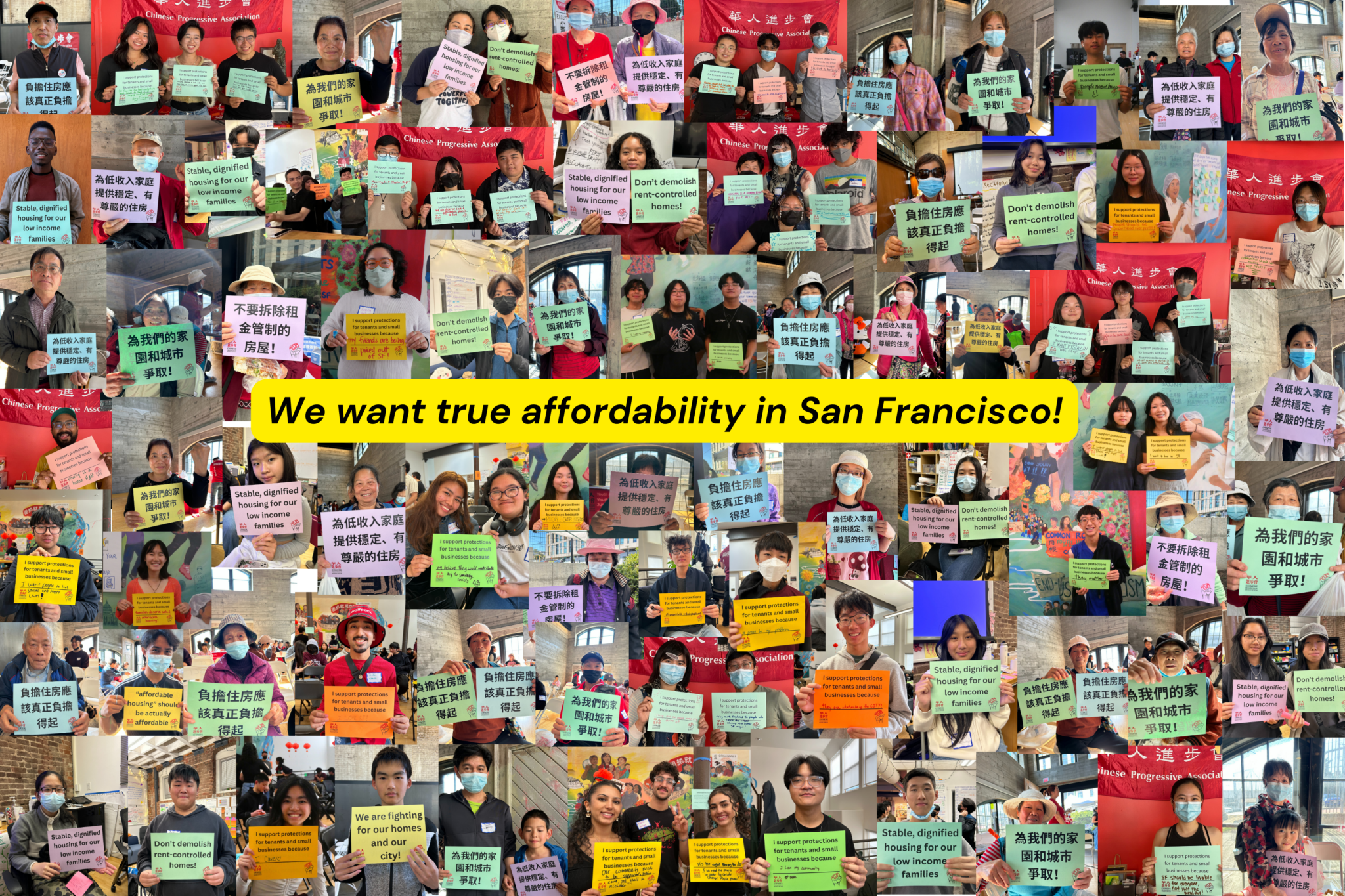
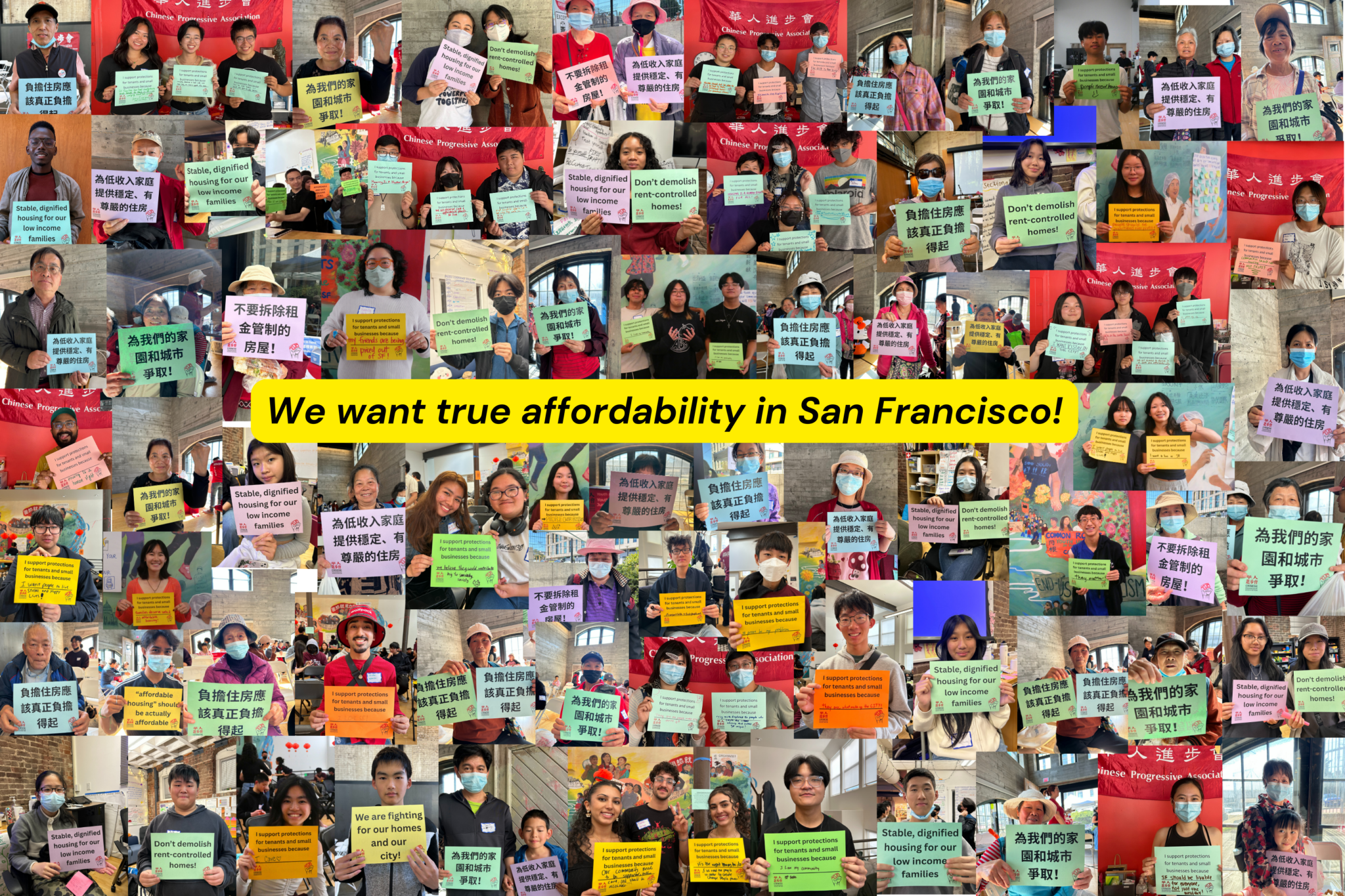
Images of tens of San Franciscans holding signs in English and Chinese calling for tenant protections, stable and dignified housing for all, and true affordability in our city!
About the authors: We are a part of Youth MOJO (Movement Of Justice and Organizing), which is a space for high school youth to learn how they can change their community for the better, and a program of the Chinese Progressive Association.